Wednesday, 25 June 2025

Flipped Learning Activity: Derrida and Deconstruction

This blog is part of flipped leaning activity,  assigned by Dr. Dilip Barad sir makes classroom time more interactive and meaningful. It promotes student engagement, critical thinking, and self-paced learning. Here is the king of Activity 👉🏻 Click here


What we explore ? 


Video 1 


Analysis

  • Derrida believes no term—philosophical or literary—can be fully and finally defined.
  • "Deconstruction" itself resists fixed definition, just like all meaning in language.
  • This creates difficulty for scholars and students who seek clear-cut meanings.
  • Deconstruction is not a negative or destructive activity.
  • It is a deep inquiry into the foundations of thought systems—how they are built and where they break.
  • Derrida was inspired by Heidegger’s idea of “Destruction,” which means unpacking traditional concepts, not destroying them.
  • The goal is to transform the way we think, not to tear ideas down blindly.
  • Deconstruction can happen on its own.
  • The same structures that give rise to meaning (like binary oppositions) also contain contradictions.
  • These contradictions lead to the system breaking down from within.
  • The concept of "différance" (to differ + to defer) explains how meaning is always delayed and built on differences—so the system undoes itself naturally.

Question & Answer


1.1. • Why is it difficult to define Deconstruction?

Deconstruction is hard to define because Derrida himself says that no concept can be fully or finally defined. Just like other complex ideas in philosophy, deconstruction keeps questioning itself. It doesn’t give a fixed meaning—so we can't explain it in one clear, simple sentence.


1.2. • Is Deconstruction a negative term?

No, deconstruction is not negative. It doesn’t mean destroying something. It's about inquiry the foundation. 


1.3. • How does Deconstruction happen on its own?

Deconstruction happens on its own because every system of thought is built on opposites (like good/evil, male/female).Derrida says the same thing that builds a system also brings out its cracks and limits. That’s how it starts deconstructing from inside.


Video 2


Analysis 

Deconstruction is not an act of destruction but a process that happens on its own when we deeply examine a system—it collapses under its own contradictions. Influenced by Heidegger’s idea of “Destruction,” Derrida developed “Deconstruction” to question how meaning and truth are built. He showed that Western philosophy relies on unstable binary oppositions (like presence/absence, reason/emotion) , and meanings constantly shift instead of staying fixed. Heidegger’s focus on “Being” and the limits of metaphysics shaped Derrida’s thinking deeply. Deconstruction reveals that truth is never final and challenges the very foundations of how we think and understand the world.

Question & Answer


2.1. • The influence of Heidegger on Derrida

Heidegger's idea of "Destruction" inspired Derrida. He took it further and called it "Deconstruction"—a way to question deep ideas by looking at how they are built.


2.2. • Derridean rethinking of the foundations of Western philosophy

Derrida said Western philosophy is built on opposites (like true/false), but these opposites are shaky. He showed that meaning is never fixed, so we must keep questioning it.


Video 3


Analysis


Ferdinand de Saussure argued that the relationship between a word and its meaning is arbitrary—there’s no natural link, only social convention. Derrida takes this further by saying that meaning is not a fixed idea in the mind, but always leads to another word, creating an infinite chain of signifiers. This challenges the idea that meaning is stable. He also explores Heidegger's concept of the "metaphysics of presence", where being is equated with presence, especially in language (e.g., using "is" to show existence). Derrida criticizes how Western philosophy relies on binary oppositions (like man/woman, light/dark, good/evil), where the first term is always privileged. This results in logocentrism—a system that favors presence and speech as truth—and phallocentrism, where male-centered language dominates. He shows that these hierarchies are built into language itself, and deconstruction exposes and questions these hidden biases.


Question & Answer


3.1. • Ferdinand de Saussureian concept of language (that meaning is arbitrary, relational, constitutive)

Saussure says that the connection between a word and its meaning is not natural but based on social convention. For example, the word “sister” doesn’t naturally relate to a person—it’s society that agrees to link the word with the meaning. This idea is called arbitrariness.


3.2. • How Derrida deconstructs the idea of arbitrariness?

Derrida says meaning isn’t fixed.

One word leads to another, so meaning keeps shifting.

There is no final or true meaning.


3.3. • Concept of metaphysics of presence

Western thought prefers what is present and visible.It treats absence or difference as less.Derrida questions this unfair preference in language and ideas.


Video 4


Analysis

Derrida’s concept of Différance is a key idea in deconstruction. It combines two meanings: “to differ” (as in to distinguish between things) and “to defer” (to postpone meaning). He shows this using a dictionary example—when we look up a word like interest, we only get other words in return. One word leads to another endlessly, meaning is never final, only postponed.

This endless chain shows that meaning is not in the mind, but always part of a system of signifiers. Meaning happens through differences between words—not fixed definitions. This undermines the idea of a "transcendental signified", or some ultimate meaning outside language, which is part of metaphysics of presence.

Derrida spells Différance with an “a” (not “e”) to highlight that this concept can only be read, not heard—challenging the Western privileging of speech over writing, known as phonocentrism. This is tied to logocentrism, the belief that spoken language holds true meaning. Différance challenges both, by showing how language depends on absence as much as presence, and that writing can be just as foundational as speech.


Question & Answer


4.1. • Derridean concept of DifferAnce

Différance is Derrida’s idea that meaning is never fixed. A word doesn’t have one final meaning—it always depends on other words. So, meaning is always changing and unfinished.


4.2. • Infinite play of meaning

When you look up a word, it leads to other words, and those lead to more words. This never ends. Meaning keeps shifting, so you never reach a final answer. This is called the infinite play of meaning.


4.3. • DIfferAnce = to differ + to defer

To differ means a word gets meaning by being different from others.

To defer means meaning is always delayed or postponed.

Derrida combines both ideas in the word différance which shows how meaning is both based on difference and never fully present.


Video 5 


Analysis


This statement is central to Derrida’s deconstruction and appears in his essay “Structure, Sign, and Play”.

It means that language cannot escape critique, because language itself carries the seeds of contradiction and instability.

Derrida critiques Structuralism (like that of Lévi-Strauss), which tried to be scientific and anti-metaphysical, but ironically relies on the same metaphysical assumptions it critiques (like binary thinking and fixed meaning).

Just as Nietzsche and Heidegger criticized metaphysics but still used its structure, structuralism too falls into what it opposes.

This happens because language is never neutral – it carries historical, philosophical assumptions, and meaning in language is always deferred (postponed) (as per Derrida’s concept of Différance).

Therefore, any critique using language also brings with it the flaws of language.

So, deconstruction is always “auto-critical”—it critiques not only the system but also itself.

Philosophy can’t get outside of tradition because it uses the same language-tradition it wants to critique.

Deconstruction reveals the blind spots of all systems, showing that ultimate truth or meaning is impossible within language.

Question & Answer


5.1. • Structure, Sign and Play in the Discourse of the Human Sciences

Derrida says that structures are based on a center, but this center is not stable. Meaning always shifts, so there is no fixed truth. This marks the start of poststructuralism.

5.2. • Explain: "Language bears within itself the necessity of its own critique."

Language is full of gaps and delays in meaning. So, it always opens itself to questioning. Even criticism uses the same language it questions—so no critique is ever complete.


Video 6


Analysis


The Yale School of Deconstruction, active in the 1970s, introduced Jacques Derrida’s deconstructive ideas into American literary criticism. Led by figures like Paul de Man, J. Hillis Miller, Harold Bloom, and Geoffrey Hartman, it emphasized that language is figurative and unreliable, filled with metaphors and symbols that prevent stable meaning.

They challenged aesthetic and historical readings, arguing that beauty and truth in literature are illusions created by language’s instability. A major idea was the undecidability of meaning—texts allow multiple interpretations with no final truth, encouraging a “free play” of meaning.

They also reinterpreted Romantic poetry, especially through Paul de Man, highlighting allegory and irony over metaphor, and revealing contradictions within the poems.

In short, the Yale School argued that literature resists fixed meaning, and language always defers truth, making deconstruction a powerful literary method.


Question & Answer


6.1. • The Yale School: the hub of the practitioners of Deconstruction in the literary theories

In the 1970s, Yale University became the center for literary deconstruction in America.

Thinkers like Paul de Man, J. Hillis Miller, Harold Bloom, and Geoffrey Hartman helped bring Derrida’s ideas from philosophy into literary theory, making deconstruction popular—and controversial.


6.2. • The characteristics of the Yale School of Deconstruction

Focus on figurative language: Literature is full of metaphors and symbols, so meaning is never clear or fixed.

Challenges to aesthetic and historical readings: Language isn’t transparent, so we can’t fully connect it to beauty or social meaning.

Undecidability of meaning: One text can have many valid interpretations, and no single one is final.

New reading of Romanticism: They argued Romantic poets use allegory, not just metaphors, showing deeper complexities.


Video 7


Analysis


  • Yale School of Deconstruction focused mainly on literary language—especially rhetoric, metaphor, and figures of speech.
         Their goal was to show that literary texts have multiple meanings, not just one fixed meaning.

  • In contrast, other critical theories like Postcolonialism, Feminism, New Historicism, Cultural Materialism, Marxism, and Psychoanalysis used deconstruction to question power, ideology, and social structures.

Postcolonial Theorists

Used deconstruction to dismantle colonial discourse, exposing how colonizers’ texts hide domination within their language.

Feminists

Applied it to subvert male/female binaries, revealing patriarchal power hidden in language and thought.

Cultural Materialists

Focused on the materiality of language—how language is shaped by and also reveals social ideologies.

New Historicists

Believed texts shape history, and history shapes texts. They use deconstruction to show how both are textual—made of words, never fully objective or fixed.


Question & Answer 


7.1. • How other schools like New Historicism, Cultural Materialism, Feminism, Marxism and Postcolonial theorists used Deconstruction?


  • New Historicism – Shows history and literature shape each other; both are open to deconstruction.
  • Cultural Materialism – Uses deconstruction to expose hidden power in language.
  • Feminism – Breaks male/female binary and challenges patriarchy.
  • Marxism – Reveals class conflict hidden in texts.
  • Postcolonial Theory – Undoes colonial narratives from within.


References

Barad, Dilip. “Flipped Learning Network.” Flipped Learning Network, 1 Jan. 1970, blog.dilipbarad.com/2016/01/flipped-learning-network.html.

DoE-MKBU. Unit 5: 5.1 Derrida & Deconstruction - Definition (Final). YouTube, 22 June 2012, www.youtube.com/watch?v=gl-3BPNk9gs.

DoE-MKBU. Unit 5: 5.2.1 Derrida & Deconstruction - Heidegger (Final). YouTube, 22 June 2012, www.youtube.com/watch?v=buduIQX1ZIw.

DoE-MKBU. Unit 5: 5.2.2 Derrida & Deconstruction - Ferdinand de Saussure (Final). YouTube, 22 June 2012, www.youtube.com/watch?v=V7M9rDyjDbA.

DoE-MKBU. Unit 5: 5.3 Derrida and Deconstruction - DifferAnce (Final). YouTube, 22 June 2012, www.youtube.com/watch?v=WJPlxjjnpQk.

DoE-MKBU. Unit 5: 5.4 Derrida & Deconstruction - Structure, Sign & Play (Final). YouTube, 22 June 2012, www.youtube.com/watch?v=eOV2aDwhUas.

DoE-MKBU. Unit 5: 5.5 Derrida & Deconstruction - Yale School (Final). YouTube, 22 June 2012, www.youtube.com/watch?v=J_M8o7B973E.

DoE-MKBU. Unit 5: 5.6 Derrida & Deconstruction: Influence on Other Critical Theories (Final). YouTube, 22 June 2012, www.youtube.com/watch?v=hAU-17I8lGY.


Wednesday, 18 June 2025

“The Necklace” by Guy de Maupassant


Introduction

Guy de Maupassant’s “The Necklace” (La Parure, 1884) stands as one of the most iconic short stories in world literature, renowned for its brilliant use of irony and its critique of social vanity. Set in 19th-century Paris, the story follows a woman whose desire to appear wealthy and glamorous leads her to a life of unnecessary suffering. Maupassant, a master of realism, paints a vivid picture of a society obsessed with status, exposing the dangers of pride, materialism, and illusion. Through a tightly woven plot and a shocking twist ending, “The Necklace” compels readers to reflect on the true value of honesty, contentment, and the deceptive nature of appearances.


Summary of “The Necklace”

Mathilde Loisel is a young, attractive woman born into a modest family and married to a humble clerk in the Ministry of Education. Although she lives a relatively comfortable life, she is deeply unhappy and dissatisfied. She believes she was meant for a life of luxury, glamour, and social prestige, and constantly daydreams about lavish homes, fine clothing, and elegant dinners—all things far beyond her means.


"She was one of those pretty and charming girls born by a blunder of destiny into a family of clerks."


Mathilde feels trapped in a life of simplicity and is embittered by the disparity between her dreams and reality. Her husband, content with their life, does his best to please her and surprises her one day with an invitation to a grand ball hosted by the Ministry. Rather than being delighted, Mathilde is upset—she has nothing suitable to wear. To appease her, her husband sacrifices his savings to buy her a new dress.

Even after that, she laments her lack of jewelry. On her husband’s suggestion, she visits her wealthy friend Madame Forestier and borrows a beautiful diamond necklace to complete her look.

At the ball, Mathilde is radiant. She enjoys her moment of glory, admired by all. But when the night ends and they return home, she discovers that the necklace is missing.


"She searched in the folds of her dress, in the folds of her cloak, in her pockets, everywhere—but did not find it."


In a panic, the couple searches but fails to find it. They decide not to tell Madame Forestier and instead purchase a replacement necklace, valued at 36,000 francs—a huge sum for them. They borrow money from various sources, mortgaging their future, and begin a life of hardship and poverty.

For the next ten years, they live in miserable conditions. Mathilde dismisses her maid and learns to do all the household work herself. She ages prematurely, losing her beauty and elegance. Her husband takes on extra work, and together, they slowly repay the debt.

One day, after the debt is finally repaid, Mathilde sees Madame Forestier and decides to tell her the truth. She recounts how losing the necklace changed her life.

Shocked and moved, Madame Forestier finally tells her:


"Oh, my poor Mathilde! Mine was false. It was worth five hundred francs at most!"

This twist reveals the devastating irony: Mathilde’s suffering was in vain. Had she confessed the loss, she could have avoided ten years of poverty. The story ends on this tragic note, emphasizing the cost of pride and the danger of placing too much value on appearances.


Message of the Story

Maupassant delivers a sobering message: vanity and pride can lead to unnecessary suffering. Honesty, humility, and contentment are often better guides than the desire to impress others.

“The Necklace” warns against being blinded by appearances and teaches that the truth—no matter how uncomfortable—is always better faced early. 


Conclusion

In “The Necklace”, Maupassant tells a deceptively simple story with a powerful moral. Through Mathilde’s downfall, he critiques materialism, vanity, and the rigid social structure of his time. The story's irony leaves a lasting impact and forces readers to question how much of our suffering stems from our own illusions.


George Herbert’s “Virtue”


Introduction


George Herbert’s Virtue is a quiet yet powerful devotional poem that explores the contrast between the fleeting beauty of the natural world and the eternal nature of a virtuous soul. As a 17th-century metaphysical poet and priest, Herbert blends spiritual reflection with lyrical grace, offering a poem that’s rich in imagery and moral depth. Though short in form, Virtue speaks volumes about life, death, and the enduring value of goodness. In a time when outward appearances are often celebrated, Herbert reminds us that it is inner purity and moral strength that truly last.


 Analysis

George Herbert’s Virtue gently walks us through the contrast between fleeting beauty and everlasting goodness. The poem opens with a vision of a perfect day:


The sweet day, so cool, so calm, so bright,

The bridal of the earth and sky:

The dew shall weep thy fall to-night;

For thou must die.


The day is described in harmonious, wedding-like imagery — a union of heaven and earth. But the dew “weeps” by nightfall, and Herbert ends the stanza with the grim reminder of death. This pattern repeats, as he turns next to the rose:


The sweet rose, whose angry and brave root

Gave life to that vermeil hue;

Bites the grace and virtue out of the root:

For thou must die.


Even the vibrant rose, full of life and fire, must perish. Its redness (“vermeil hue”) comes from a strong root, but the beauty cannot escape time’s touch. The third stanza expands the image to the larger cycle of life:


Sweet spring, full of sweet days and roses,

A box where sweets compacted lie;

My music shows ye have your closes,

And all must die.


Spring, the season of renewal, is pictured as a treasure chest of pleasures. But even music, which often represents harmony and joy, has its “closes” — its endings. The mood turns gently melancholic. Just as a song must end, so must life’s sweetest seasons.


Only a sweet and virtuous soul,

Like season’d timber, never gives;

But though the whole world turn to coal,

Then chiefly lives.


Here lies the heart of the poem. Unlike all the lovely yet dying things before, the virtuous soul is strong like seasoned wood — resilient, lasting, glowing. Even when the world collapses into darkness, virtue doesn’t just survive; it thrives. It lives more truly when everything else fades.


Through this structure, Herbert teaches that while nature’s beauty fades, virtue is timeless. It's a quiet but enduring fire — not loud, not showy, but eternal. His message is simple yet profound: what glows within us lasts longer than what shines outside us.


 Conclusion

George Herbert’s Virtue is not just a religious poem; it is a universal meditation on mortality and moral endurance. In every image of passing beauty, we are invited to reflect on what truly matters. While flowers wither and days end, a virtuous life carries an eternal flame. In today’s fast-changing, image-driven world, Herbert’s message is more relevant than ever — that quiet goodness, like seasoned wood, burns deep and lasts long.

James Joyce’s Araby

 James Joyce’s short story Araby, from his collection Dubliners, is not just about a boy going to a fair. It’s a powerful and emotional journey of growing up, understanding disappointment, and realizing that not all dreams come true the way we expect.


A Crush That Feels Like Everything

The story is told by a young boy who lives in a quiet, dull street in Dublin. He develops a crush on his friend’s sister and starts thinking about her all the time. For him, she becomes a symbol of beauty and hope in a grey and boring world. When she mentions she wants to visit a bazaar called Araby, the boy promises he will go and bring her something.


This moment becomes very important for him. He dreams about the bazaar like it’s a magical place, and he imagines impressing the girl with a special gift. It’s not just about buying something—it’s about showing love and escaping the dullness around him.


The Big Letdown

But when the day finally comes, everything starts going wrong. His uncle comes home late, and by the time the boy reaches the bazaar, it’s almost closed. The place is not magical at all. It’s dark, half-empty, and the people there don’t even care that he’s come. He doesn’t find anything special to buy, and more importantly, the whole place feels disappointing.


At that moment, the boy realizes something painful. The magical world he imagined was only in his head. The real world doesn’t always match our hopes or feelings. His excitement turns into sadness and anger—not just because the trip failed, but because he feels foolish for believing in something that wasn’t real.


A Quiet Lesson About Life

Araby is a short story, but it teaches a big lesson. Growing up often means realizing that things don’t work out the way we expect. Sometimes, the world seems dull or unfair, and the people around us don’t understand how important something is to us.


Joyce doesn’t use big words or dramatic scenes. Instead, he shows how something small—like going to a fair—can lead to a deep emotional change. The boy doesn’t say much at the end, but his silent sadness says everything. He’s not just upset about the bazaar—he’s feeling the weight of growing up and losing his first dream.


Final Thoughts

Araby is a gentle but powerful story. It starts with simple feelings—like a crush or excitement—but ends with a quiet realization about life. Through the eyes of one boy, Joyce shows us that part of growing up is learning to face the truth, even when it hurts.

The Second Coming by W.B. Yeats: A Prophetic Vision of Chaos and Change

Introduction:

W.B. Yeats’s The Second Coming, written in 1919, stands as one of the most haunting and prescient poems of the 20th century. Composed in the aftermath of World War I and amidst the political turbulence of the Irish War of Independence, the poem captures a moment in history where old certainties were crumbling, and the future seemed ominous and unknowable. Yeats, a poet deeply influenced by mysticism, mythology, and historical cycles, uses rich symbolism to portray the violent birth of a new era—a second coming not of Christ, but of something terrifying and unknown.
  

Analysis: The Falcon, the Gyre, and the Rough Beast

The poem opens with a striking image of disintegration:

Turning and turning in the widening gyre
The falcon cannot hear the falconer;
Things fall apart; the centre cannot hold;
Mere anarchy is loosed upon the world...

The "gyre" is Yeats's symbol for historical cycles, spirals of time that expand and collapse in 2,000-year phases. The falcon, a symbol of human civilization or perhaps the soul, has lost contact with its master, suggesting a world spinning out of control. The collapse of order ("the centre cannot hold") anticipates a descent into chaos, a theme that resonates with both the political upheavals of Yeats’s day and modern global uncertainties.

Yeats paints a vision of the world saturated with blood and indifference:

The blood-dimmed tide is loosed, and everywhere
The ceremony of innocence is drowned;
The best lack all conviction, while the worst
Are full of passionate intensity.

These lines express Yeats’s fear that the moral compass of the world is inverted—those who should lead with wisdom are passive, while extremists shape the new order with unchecked zeal.

In the second half, Yeats turns prophet:

Surely some revelation is at hand;
Surely the Second Coming is at hand...

But instead of Christ, what emerges from "Spiritus Mundi" (the collective soul of the world) is a "rough beast"—a monstrous, sphinx-like figure "slouching towards Bethlehem to be born." This chilling final image suggests not salvation, but the birth of a new, darker era. The "Second Coming" is no longer a Christian redemption but an apocalyptic transformation.


Conclusion: 

Though rooted in the early 20th century, The Second Coming has gained fresh relevance in every era of turmoil—from the Cold War to modern political unrest and climate crises. Yeats’s vision of a crumbling world order, rising extremism, and the cyclical nature of history speaks with eerie clarity even today. The poem doesn’t offer answers, but it forces us to confront the question: What kind of future are we spiraling toward?

How Five Point Someone ( Chetan Bhagat ) Became the Spirit of 3 Idiot

Chetan Bhagat’s Five Point Someone is the emotional seed from which 3 Idiots grows, but the film doesn’t merely follow the plot—it reinterprets it. The novel revolves around three friends at IIT who struggle academically and emotionally under a rigid system. It’s candid, personal, and marked by Bhagat’s informal narrative style. However, while the book quietly critiques the system, the film boldly questions it.

Rajkumar Hirani and Abhijat Joshi reshape the characters and structure to make the story more cinematic and impactful. Ryan becomes Rancho, and Hari morphs into Farhan—but Rancho is no ordinary protagonist. He is not just resisting the system for himself; he’s a visionary who inspires others to rethink success itself. The shift in character purpose—from survival in the novel to transformation in the film—is what makes 3 Idiots more than an adaptation.

The film also introduces new scenes and subplots—like the childbirth scene, and the reunion twist—that aren’t present in the book but deepen the emotional and thematic layers. These changes don’t betray the book; they amplify its spirit. In doing so, 3 Idiots becomes a more powerful commentary on education, identity, and self-worth, especially for a generation trapped between societal expectation and personal aspiration.


Lasting Impact of 3 Idiots :

More than a decade since its release, 3 Idiots remains more than just a film—it’s a cultural marker. It sparked a much-needed conversation about the purpose of education in India and beyond. Even today, students quote lines like "All is well" not just for comfort but as an expression of silent resistance against academic pressure. Rancho’s philosophy—"Pursue excellence, and success will follow"—has become a motto for those seeking meaning beyond marks.

Most importantly, it gave a voice to millions of students who had previously felt alone in their struggle. That alone is a legacy worth celebrating.

David Copperfield by Charles Dickens


Introduction

First published in 1850, David Copperfield remains one of Charles Dickens’s most beloved novels. Often considered his most autobiographical work, the novel follows the life of David Copperfield from childhood to maturity. It captures the struggles, triumphs, relationships, and the ever-changing tide of fortune in Victorian England. Through David’s journey, Dickens explores themes of personal growth, social injustice, and the resilience of the human spirit.


Summary of David Copperfield 

David Copperfield by Charles Dickens is a coming-of-age novel that traces the life of David from a troubled childhood to his development into a successful writer. Orphaned at a young age and mistreated by his cruel stepfather, Mr. Murdstone, David is sent to work in harsh conditions, experiencing firsthand the struggles of the lower class in Victorian England. Along the way, he meets a vivid cast of characters—some kind and supportive like his eccentric Aunt Betsey Trotwood and loyal friend Agnes Wickfield, and others deceitful and self-serving like Uriah Heep and Steerforth. These relationships deeply influence his moral and emotional growth.

Through David’s personal journey, Dickens explores themes of identity, resilience, social injustice, and the pursuit of genuine love and purpose. David's early romantic illusions, represented by his first marriage to the delicate and naïve Dora, eventually give way to a deeper, more enduring bond with Agnes. The novel not only mirrors Dickens’s own life experiences but also offers a powerful critique of the class system and moral hypocrisy of Victorian society. With its memorable characters and emotional depth, David Copperfield stands as one of Dickens's most autobiographical and enduring works.


Characters


1.David Copperfield

The protagonist and narrator, David is sensitive, intelligent, and introspective. His journey is marked by loss (his mother, Clara, dies early), betrayal (from stepfather Murdstone and Uriah Heep), and eventual self-discovery. Through his trials, he matures into a successful writer and compassionate human being. His evolution mirrors Dickens’s own rags-to-riches story.

2.Aunt Betsey Trotwood

Eccentric, sharp-tongued, and fiercely independent, Aunt Betsey provides both comic relief and emotional support. She takes in David when he is most vulnerable and becomes a symbol of nonconformity and moral strength. Her feminist stance—seen in her hatred for donkeys (representing male authority)—makes her one of Dickens’s most progressive female characters.

3.Agnes Wickfield

The moral center of the novel, Agnes is calm, wise, and unwavering in her principles. She silently endures her father's alcoholism and Uriah Heep’s scheming, always placing others before herself. Though she remains in the background for much of the novel, her steady love and presence ultimately guide David toward emotional and moral fulfillment.

4.Uriah Heep

Uriah is the quintessential Dickensian villain—duplicitous, manipulative, and driven by resentment of the upper class. His repeated assertion of being “humble” only masks his hunger for control and revenge. Through him, Dickens criticizes hypocrisy and false modesty, especially among those who exploit social mobility for personal gain.

5.Mr. Micawber

Loosely based on Dickens’s own father, Mr. Micawber is a man of eloquence, optimism, and chronic financial instability. Despite repeated failures, he believes that “something will turn up,” symbolizing the spirit of endurance. His character adds humor but also reflects the tragedy of those trapped by economic misfortune.

6.Dora Spenlow

David’s first wife, Dora, is charming and childlike but emotionally unequipped for marriage. Her inability to manage a household or connect with David on a deeper level leads to disillusionment. Dora's early death represents the fading of youthful fantasy and the painful entrance into adult reality.

7.Emily and Ham

Their tragic subplot highlights class boundaries, gender double standards, and the consequences of betrayal. Emily, seduced and abandoned by a gentleman, faces social ruin, while Ham, her loyal suitor, dies tragically trying to save her seducer. Dickens uses their story to condemn a society that shames women but excuses men.


Themes


1. Personal Growth and Identity

At its core, David Copperfield is a bildungsroman—a coming-of-age story. The novel traces David’s transformation from a vulnerable boy into a mature, self-aware man. This growth is not just external (moving from poverty to success) but deeply internal—marked by moral development, emotional resilience, and the search for personal identity. David learns from each hardship, heartbreak, and human connection, gradually shaping his sense of self.


2. Social Class and Injustice

Dickens uses the novel to critique the rigid class structure and harsh realities of Victorian society. Poverty, child labor, debt, and lack of social mobility are recurring motifs. David’s own experience in a factory, drawn from Dickens's life, exposes the cruelty endured by children. Characters like Mr. Micawber, who is imprisoned for debt, and Emily, who is socially ostracized, highlight the unforgiving nature of the class system.

3. Hypocrisy and Deceit vs. Integrity and Kindness

The novel contrasts characters who deceive and manipulate with those who act with sincerity and kindness. Uriah Heep, with his slimy "humbleness," represents false morality and ambition cloaked in virtue. In contrast, characters like Agnes Wickfield and Betsey Trotwood embody compassion, honesty, and emotional intelligence.

4. Marriage and Relationships

Dickens explores various models of marriage—some successful, others doomed by immaturity, selfishness, or power imbalance. David’s first marriage to Dora is marked by romantic idealism but fails due to incompatibility. His later union with Agnes, however, is founded on deep friendship, mutual respect, and emotional maturity—emphasizing the idea that true partnership grows with time and wisdom.


Conclusion

David Copperfield is more than a coming-of-age novel; it’s a profound reflection on life, loss, resilience, and identity. With unforgettable characters and a deeply personal voice, Dickens captures the soul of a society in transition. Even today, David’s story resonates with readers facing their own battles between fate and free will. It’s a timeless tale that reminds us: the path to maturity is never straight, but it is always worth the walk.


The Blessed Damozel by Dante Gabriel Rossetti


Introduction

In the golden twilight of the Pre-Raphaelite movement, Dante Gabriel Rossetti’s poem The Blessed Damozel stands as a haunting testament to unfulfilled love, spiritual yearning, and the aesthetic ideals of 19th-century Romanticism. First published in 1850 and revised in 1870, this poem elegantly bridges the celestial with the earthly, blurring the lines between spiritual devotion and human desire.


Analysis

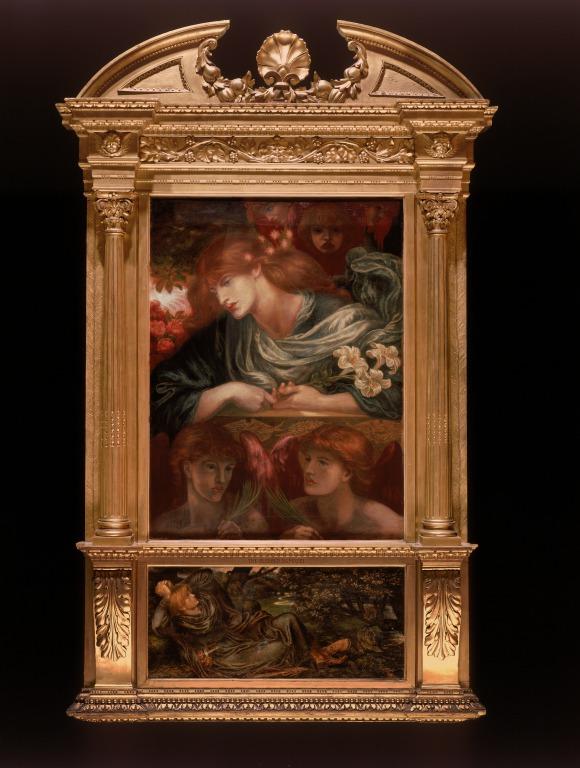
The Blessed Damozel centers on a woman who has died and now resides in Heaven. She leans over the "gold bar of Heaven," gazing down upon her still-living lover. Her yearning is not only spiritual but also intensely emotional and sensual. Rossetti blurs the distinction between sacred love and earthly passion, portraying the Damozel as a symbol of both purity and desire.

The Damozel's imagined future with her beloved in paradise is filled with romantic imagery—walking together in the groves of Eden, singing among the angels, and worshipping side by side. Yet, her heaven is incomplete without him. This presents a poignant contradiction: paradise itself is not perfect without the human bond of love.

Rossetti’s technique of interweaving the Damozel’s voice with the thoughts of her earthly lover creates a dual narrative. While she hopes for a future reunion, he mourns in the present. This contrast heightens the emotional tension and underscores the cruel passage of time.

The poem is steeped in Pre-Raphaelite aesthetic values—vivid natural imagery, medieval references, and a strong visual quality that mirrors Rossetti’s own painting of the same name. The religious setting of the poem does not suppress the Damozel’s human emotions; instead, it elevates them, making love a divine force.


Conclusion

In The Blessed Damozel, Rossetti crafts a timeless elegy for lost love—one that transcends death but never escapes longing. Through lush language and dual perspectives, he captures the ache of separation and the hope of spiritual reunion. The poem ultimately suggests that even the most divine realm is incomplete without love, blurring the boundary between Heaven and Earth. Rossetti’s vision is not one of detached divinity but of a deeply human heart that continues to love, wait, and dream.


Animal Farm by George Orwell


Animal Farm by George Orwell – A Timeless Political Allegory

When George Orwell published Animal Farm in 1945, he described it as a "fairy story." But beneath the surface of talking animals and barnyard rebellion lies one of the most powerful political commentaries of the 20th century. With its blend of simplicity and profound symbolism, Animal Farm remains just as relevant today as it was in the aftermath of World War II.


 The Story in a Nutshell

Set on a typical English farm, the novel begins with Old Major, a wise old boar, who inspires the animals to revolt against their human owner, Mr. Jones. Old Major’s vision is a utopia where animals are free, equal, and control their own labor and produce. After his death, the animals stage a successful revolution and take over the farm, renaming it "Animal Farm."

Initially, the new society thrives under the principles of "Animalism." But as the pigs — especially Napoleon and Snowball — assume leadership roles, power begins to corrupt. Eventually, Napoleon becomes a tyrant, and the animals find themselves under a regime that is arguably worse than the one they overthrew.

The once-hopeful mantra “All animals are equal” is gradually perverted into the chilling final commandment:

"All animals are equal, but some animals are more equal than others."


Allegory and Meaning

On the surface, Animal Farm is a fable, but it’s really a thinly veiled allegory of the Russian Revolution and the rise of Stalinism. Here's a brief comparison:

  • Old Major = Karl Marx / Vladimir Lenin

  • Napoleon = Joseph Stalin

  • Snowball = Leon Trotsky

  • Boxer the Horse = The working class

  • The Dogs = Secret police / military enforcers

  • Mr. Jones = The old ruling elite / Czar Nicholas II

Orwell critiques how revolutionary ideals can be manipulated by those in power, turning noble goals into tools of oppression. The novel shows how propaganda, fear, and rewriting of history are used to maintain control.

 Why It Still Matters

Even though it's rooted in a specific historical context, Animal Farm speaks to universal themes:

  • The dangers of absolute power

  • How easily truth can be distorted

  • The role of the masses in enabling tyranny

  • The fragility of democracy and equality

In an age of political polarization, media manipulation, and global movements for justice, Animal Farm continues to offer critical insights into how power structures operate.


 Final Thoughts

Animal Farm is more than a school reading assignment — it’s a warning. It’s a short, accessible book but it delivers a heavyweight punch that leaves readers questioning power, truth, and freedom.

If you’ve read it before, read it again — especially now. And if you’ve never read it, you’re in for a deceptively simple story with a deeply unsettling message.


Monday, 2 June 2025

Film Review : Buy Now! The Shopping Conspiracy

A Quick Review of Buy Now! The Shopping Conspiracy (2024)


Buy Now! The Shopping Conspiracy (2024) shines a light on the hidden forces behind the rampant consumerism of modern society. Directed by Nic Stacey, the documentary critiques the five key tactics used by corporations to drive waste, deception, and manipulation: 1)Sell More, 2)Waste More, 3)Lie More, 4)Hide More, and 5)Control More.


It reveals how consumerism is engineered to benefit corporations at the expense of people and the planet. Psychological tactics—like flash sales, limited-time offers, and emotional manipulation—are exposed as deliberate tools to encourage compulsive buying, fueling overproduction and excessive consumption.


A major focus of the film is the waste generated by industries like fast fashion and electronics, where unsold goods are often destroyed rather than redistributed. This contributes to both environmental destruction and global inequality.


The documentary highlights how corporations "lie more" through deceptive marketing and greenwashing—a practice where companies falsely portray themselves as environmentally responsible to mislead consumers. Greenwashing plays a central role in maintaining consumer trust while masking harmful practices, allowing businesses to appear ethical without making meaningful changes.


While the film succeeds in showing how companies "hide more" by covering up labor abuses and ecological damage, it doesn't fully explore the legal and political structures that enable these actions. Similarly, though it effectively illustrates how corporations "control more" by shaping consumer behavior and public perception, it offers limited guidance on how individuals can resist or reclaim their agency.


The Ultimate Pressure and the Limits of Reform

As governments and corporations face growing pressure to tackle environmental harm, reforms like Right to Repair laws and new environmental departments are gaining traction. Buy Now! The Shopping Conspiracy highlights the push to make electronics repairable instead of disposable, but these steps alone aren't enough.

The real issue is that overproduction and overconsumption are still driven by profit-first models. While repairable products may reduce e-waste, they don't address the larger cycle of excessive production and waste. Unless we challenge the economic structures that prioritize constant growth and disposability, these reforms will only scratch the surface.

Ultimately, Buy Now! is a compelling critique of modern consumer culture, but leaves viewers wanting deeper insight into the systemic enablers of corporate power—and clearer paths to meaningful resistance.


Listening Skill

Q.1 What is Listening? Explain the main steps involved in the process of listening. Introduction Listening is one of the most important comm...